If you are comparing 1‑800Accountant with other options, you are likely looking for deeper financial oversight, stronger reporting, or a partner who can scale with your business. Many founders reach a point where basic bookkeeping is not enough. Month-end slows down, reporting falls behind leadership conversations, and forecasts do not match the pace of decisions. This guide walks through the best alternatives to 1‑800Accountant and highlights one clear pick for teams that want controller-led bookkeeping and real FP&A support.
CoCountant exists for businesses that want clean books, investor-ready reporting, and a thoughtful financial partner who understands how startups grow.
Why consider a 1‑800Accountant alternative
Switching usually happens for a few predictable reasons. Reporting may lack the depth needed for board updates. Financials might not follow GAAP consistently. Forecasting is often not included. Some teams outgrow basic bookkeeping and need stronger process leadership.
When you compare providers, focus on these areas:
- Scalability and structure. Your accounting partner should support you from seed to growth without slowing down.
- Controller involvement. A controller sets policies, reviews complex entries, and improves the quality and speed of the close.
- Reporting depth. You want financials that answer investor questions, not raise new ones.
- FP&A capabilities. Decisions move faster when forecasts connect smoothly with actuals.
- Integration strength. Your accounting should align with payroll, payments, subscriptions, and revenue recognition.
The 5 best 1‑800Accountant alternatives for startups and growing businesses
1) CoCountant
Overview
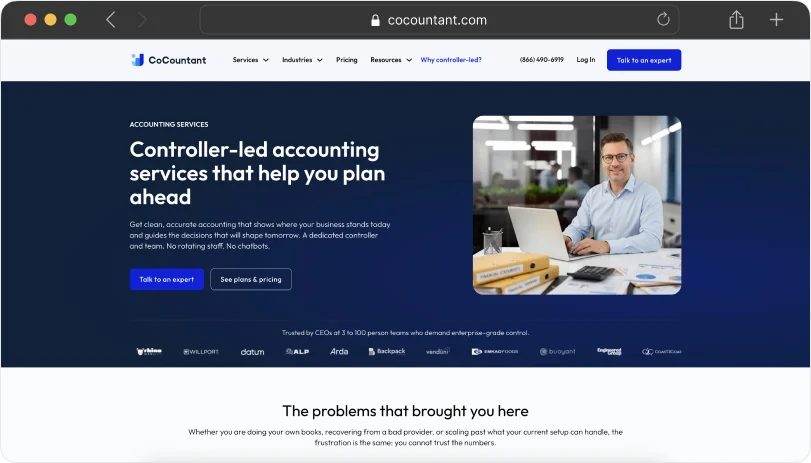
CoCountant combines controller‑led bookkeeping with practical FP&A so founders get clean books and a working plan in the same relationship. Month‑end follows a disciplined close with tight reconciliations and documented policies. Leaders receive GAAP financials, KPI narratives, and clear variance explanations that support faster decisions. The engagement is built for startups and growth companies that need accuracy, speed, and investor‑ready reporting.
Pricing
Starting from $160 per month.
Pros
- Controller oversight that enforces close discipline and policy
- Investor‑ready reporting with clear variance narratives and KPI visibility
- Forecasts, scenarios, and cash runway views are part of the engagement
- Clean, audit‑friendly documentation
- Scales across funding rounds without forcing an early ERP
Cons
Not a DIY software tool for teams that prefer to self manage
Best for
Startups and growth companies that want a finance partner, not just a ledger.
2) Pilot

Overview
Pilot focuses on outsourced bookkeeping for startups and is familiar with SaaS stacks, subscription metrics, and common workflows. The service standardizes month‑end routines and provides a clean handoff for tax prep or investor requests. Teams appreciate the quick onboarding and consistent rhythm of deliverables. It’s a straightforward way to get books closed with minimal lift from founders.
Pricing
Published tiers start at $99 per month for Essentials and $299 per month for Core, with higher‑tier and custom plans above that.
Pros
- Startup‑friendly onboarding with familiarity across SaaS tools
- Clean monthly bookkeeping and standardized workflows
Cons
- Controller involvement and FP&A typically require higher tiers
Custom reporting can be limited without add‑ons
Best for
Early‑stage startups seeking reliable monthly bookkeeping with minimal setup.
3) Fincent
Overview
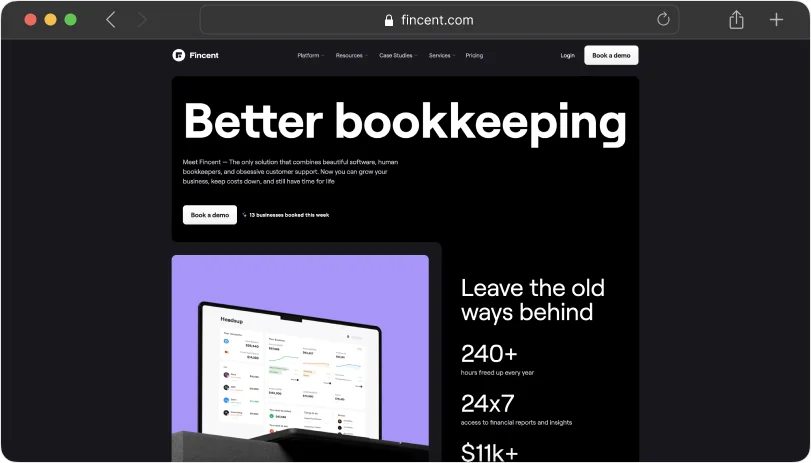
Fincent offers a modern, founder‑friendly experience with quick setup and a clean monthly portal. The service keeps day‑to‑day bookkeeping current and packages results in an interface that’s easy to follow. For teams that want a low‑friction handoff and transparent month‑end status, it hits the mark. More advanced needs can be layered on as complexity grows.
Pricing
Public plans begin at $189 per month for Basic and $429 per month for Power; custom above that.
Pros
- Fast onboarding and responsive support
- Clear monthly view of transactions and trends
Cons
- Controller‑level policy setting often outside base scope
FP&A and complex GAAP topics usually require additional support
Best for
Founders who want a tidy handoff of daily bookkeeping and simple monthly visibility.
4) Xendoo
Overview
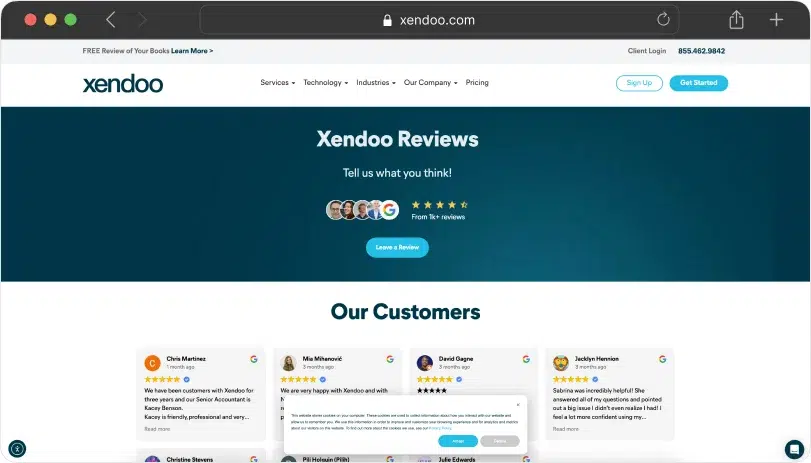
Xendoo provides subscription bookkeeping with predictable pricing and a steady month‑end cadence. Dedicated teams handle reconciliations and produce tax‑time‑ready financials, which many small businesses find reassuring. It aims for reliability over complexity, with clear limits on accounts and integrations per plan. If you value consistency and simple pricing, it’s an easy comparison point.
Pricing
Three core tiers at $395, $695, and $995 per month based on expense volume and account limits.
Pros
- Consistent categorization and tax‑time readiness
- Accessible service team and straightforward plans
Cons
- Advanced accruals and multi‑entity needs may require upgrades
FP&A and controller oversight are limited in core packages
Best for
Small businesses that want dependable bookkeeping with simple pricing.
5) CapForge
Overview
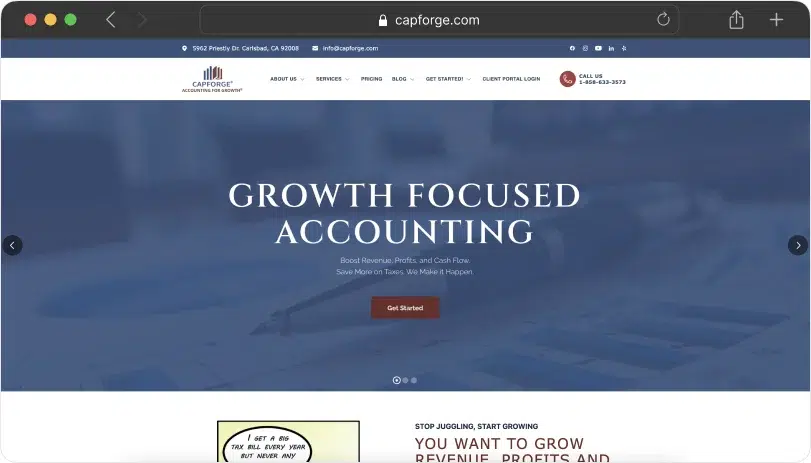
CapForge is known for cleanup projects and process stabilization, which is helpful if your books have fallen behind. After getting current, they move you into a standardized monthly routine. The firm also offers higher‑touch growth packages that combine bookkeeping, tax strategy, and advisory. It’s a pragmatic choice when you need to fix the past and then keep pace each month.
Pricing
Bookkeeping packages are listed from $249 to $995 per month; growth accounting packages from $1,295 to $4,495 per month depending on scope.
Pros
- Strong at historical cleanups and stabilizing the books
- Repeatable monthly cadence once baseline is set
Cons
- Controller guidance typically separate
Strategic finance and forecasting require added scope
Best for
Teams with backlogs that need cleanup plus a predictable monthly routine.
Comparison table
| Solution | Category | Best for | Controller or CFO oversight |
| CoCountant | Outsourced accounting service | Startups and growth‑stage teams | Included, controller‑led |
| Pilot | Outsourced bookkeeping | Early‑stage startups | Limited, varies by tier |
| Fincent | Outsourced bookkeeping | Founders who want a tidy, low‑friction handoff | Limited in base scope |
| Xendoo | Outsourced bookkeeping | Small businesses wanting predictable pricing | None or limited |
| CapForge | Outsourced bookkeeping | Teams needing cleanup plus consistent cadence | Limited, typically separate |
How to choose the right alternative
Start with your next 12 to 24 months. Growth changes what you need from your finance partner.
- Decide how fast you want your close to run.
- Look at your forecast and ask whether it connects smoothly to actuals.
- Map your integrations to ensure your accounting partner fits your workflows.
- Evaluate whether you need controller oversight.
- Compare total cost, including software, services, and internal time.
Final recommendation: CoCountant
CoCountant brings controller-led bookkeeping together with practical FP&A in a single relationship. You get a full close process, accurate reporting, and a forward-looking financial model that mirrors your actual operations. Accountants handle the day-to-day. A controller reviews and enforces accounting policy. FP&A connects the dots between your budget, your forecast, and your actual results.
What you get with CoCountant
- Controller leadership that improves accuracy, speeds the close, and keeps your books consistent
- Reliable reporting that includes GAAP statements, KPI tracking, and board-ready variance narratives
- FP&A support for forecasting, scenarios, and cash runway planning
- Documentation and compliance discipline that removes panic from audits and diligence
- A scalable path that grows smoothly with your company without pushing you into an ERP too early
Ideal for startups, venture-backed teams, and growing SMBs that want accuracy, insight, and financial guidance. Not for teams who want a software-only tool and prefer to self manage the books.
FAQs
What are the best 1-800Accountant alternatives in 2026?
The best 1-800Accountant alternatives 2026 include services that combine bookkeeping, tax support, and proactive financial guidance. Options like CoCountant, Pilot, and inDinero are commonly evaluated by entrepreneurs seeking more consistent and scalable support.
Why do entrepreneurs switch from 1-800Accountant?
Entrepreneurs often switch due to inconsistent service quality, limited advisory insight, or difficulty scaling support. As revenue grows, many prefer accounting partners that offer clearer ownership and strategic input.
Are affordable accounting services reliable for startups?
Affordable services can be reliable if they offer clear processes and consistent oversight. The key is ensuring affordability doesn’t come at the cost of accuracy, responsiveness, or insight.
Do entrepreneurs need controller-led accounting?
Controller-led accounting becomes increasingly valuable as businesses grow. It helps entrepreneurs understand trends, manage cash flow, and make informed decisions rather than reacting to reports after the fact.
How do I choose the right accounting platform for my business?
Start by assessing your current complexity and growth plans. Compare features, pricing transparency, and review sentiment to find a platform that can support your business today and scale with you tomorrow.